Discovering the Unique Flora and Fauna of the Blue Mountains
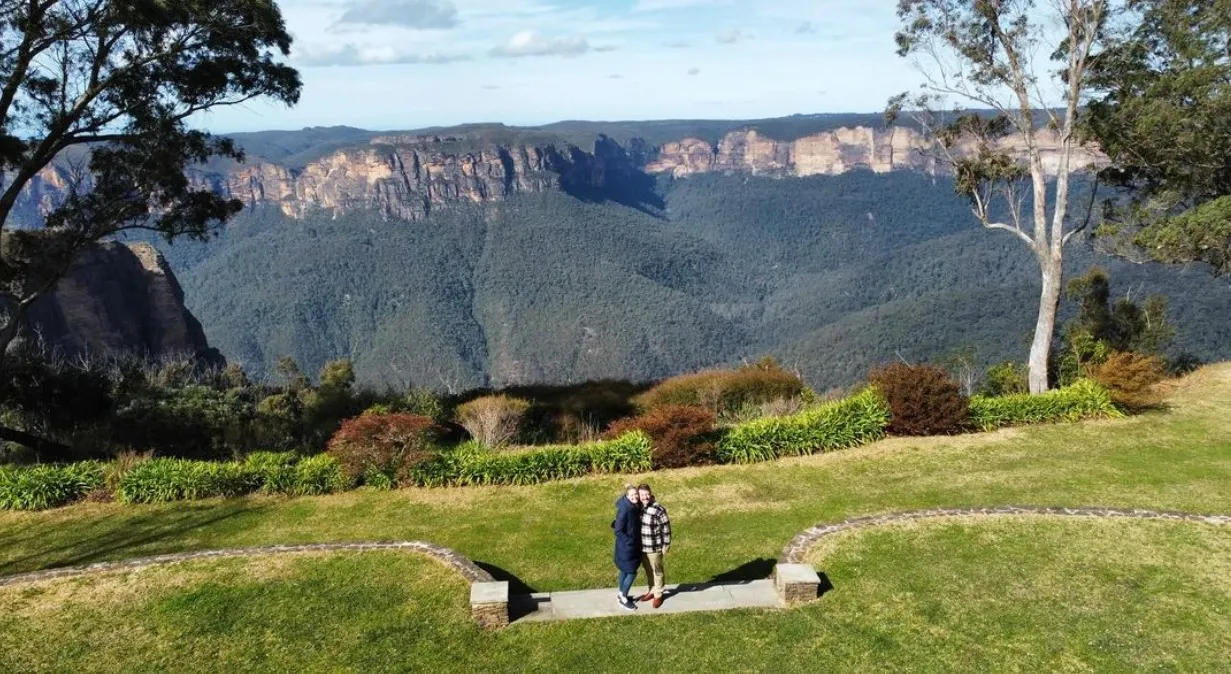
The Blue Mountains in New South Wales, Australia are the ultimate playground to explore one of the most biologically diverse areas in the country. Famous for its beauty the Blue Mountains National Park has jagged rock formations, deep valleys and eucalypt forests. This includes the Grose Valley, Jamison Valley and the famous Wentworth Falls. This is a special window into the Australian landscape.
Why the Blue Mountains
The Blue Mountains are famous for its ecological diversity and scenery. The area has eucalypt-dominated landscapes and sclerophyll forests that support different kinds of native plants and animals. That’s why there are areas with high cliffs and deep valleys like Grose Valley or Jamison Valley.
Blue Mountains National Park, along with Kanangra-Boyd National Parks and other adjacent reserves, are crucial for maintaining high biodiversity values in this region. It’s a botanist’s paradise to learn about Australia’s unique flora and fauna due to its vast eucalypt forests and rich plant communities, including ancient species. And the fact it’s only a short drive from Sydney – Australia’s biggest city – makes it a day trip or long-stay destination.
Plant Communities in Blue Mountain Exploration
Just like the landscapes they occupy, these plant communities are diverse. They range from lush eucalyptus forests to dry sclerophyll forests with different compositions of plant species and functioning ecosystems.

- Eucalypt Forests: Eucalypts dominate these forests which cover large areas of the Blue Mountains. The genus Eucalyptus within these forests has many types of eucalypt trees. Eucalypt diversity contributes to community composition and many native species specific to the area and total ecosystem diversity. Interactions between different eucalypt species are the dynamic processes in these wet woodlands, so they are resilient.
- Sclerophyll Forests: These have drought tolerant leathery leaves adapted to the dry conditions of the area. Flora-like grass trees and gum trees are suited to the Blue Mountains terrain where they occur. The landscape services provided by these vegetation communities support many animal groups and maintain ecological balance.
- Plant Species and Evolution: Plant life in the Blue Mountains has a long history of adaptation to changing environmental conditions. Ancient species like the relict Pherosphaera Fitzgerald are a reflection of the region’s botanical past. Plant family diversity and complex interactions between native plants are the ecological significance of the Blue Mountains.

Indigenous Plants
The Blue Mountains are home to many different native plants which have different roles in this ecosystem:
- Eucalyptus Trees: These eucalypt trees make up most of the eucalypt dominated landscape in the Blue Mountains. They provide habitat and food for many Australian animals and are part of the biodiversity in this area. The height of the trees, plus the great canopy of eucalypt forests, creates different habitats for many species.
- Waratahs: They are famous for their bright red flowers and are part of the native flora. Their flowers add colour to the green landscape of the Blue Mountains and support local pollinators.
- Banksias: Banksias are adapted to the conditions here with their flower spikes and tough leaves. They support many bird species and contribute to plant diversity in the area.
Native Wildlife
The Blue Mountains have rich plant communities that support various wildlife, including several endemic and relic species. The different habitats in the area (eucalypt forests, sclerophyll woodlands) provide many resources for many animals.
Native Birds (Aves) in the Blue Mountains
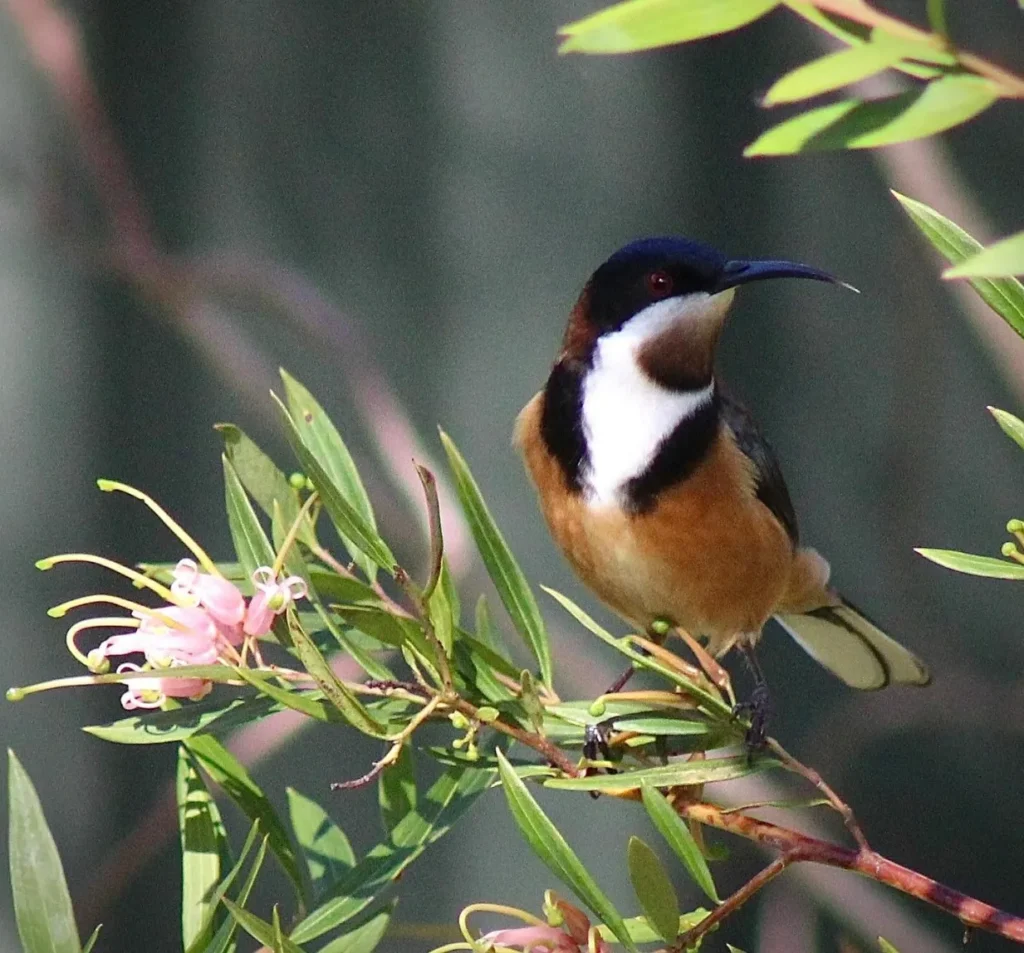
- Eastern Spinebill- A small nectar-feeding bird often seen in the Blue Mountains with its curved bill and energetic feeding habits feeding on flowers in eucalypt forests.
- Crimson Rosella- This colourful parrot stands out among other birds in the Blue Mountains and adds colour to its avifauna.
- Laughing Kookaburra- Known for its call, Laughing Kookaburra is a common bird in the Blue Mountains perched on trees and adds to the soundscape of this part of Australia.
Indigenous Amphibians (Frogs)

- Green Leaf Tree Frog (Litoria phylloxera): Bright green-coloured arboreal lifestyle frog species that are part of the amphibian community in BM.
- Blue Mountains Tree Frog (Litoria citropa): This is one of the unique frogs found here. It suits the local environment well and plays an important role in ecosystem function.
Native Reptiles in the Blue Mountains Region
- Eastern Water Dragon: A large lizard that can be found mostly around water in the Blue Mountains as it is adaptable to the different habitats in this area.
- Blue Mountains Water Skink: One of the skinks in the wetlands of the Blue Mountains is this skink which is part of the reptilian fauna.
Native Mammals in the Blue Mountains, NSW
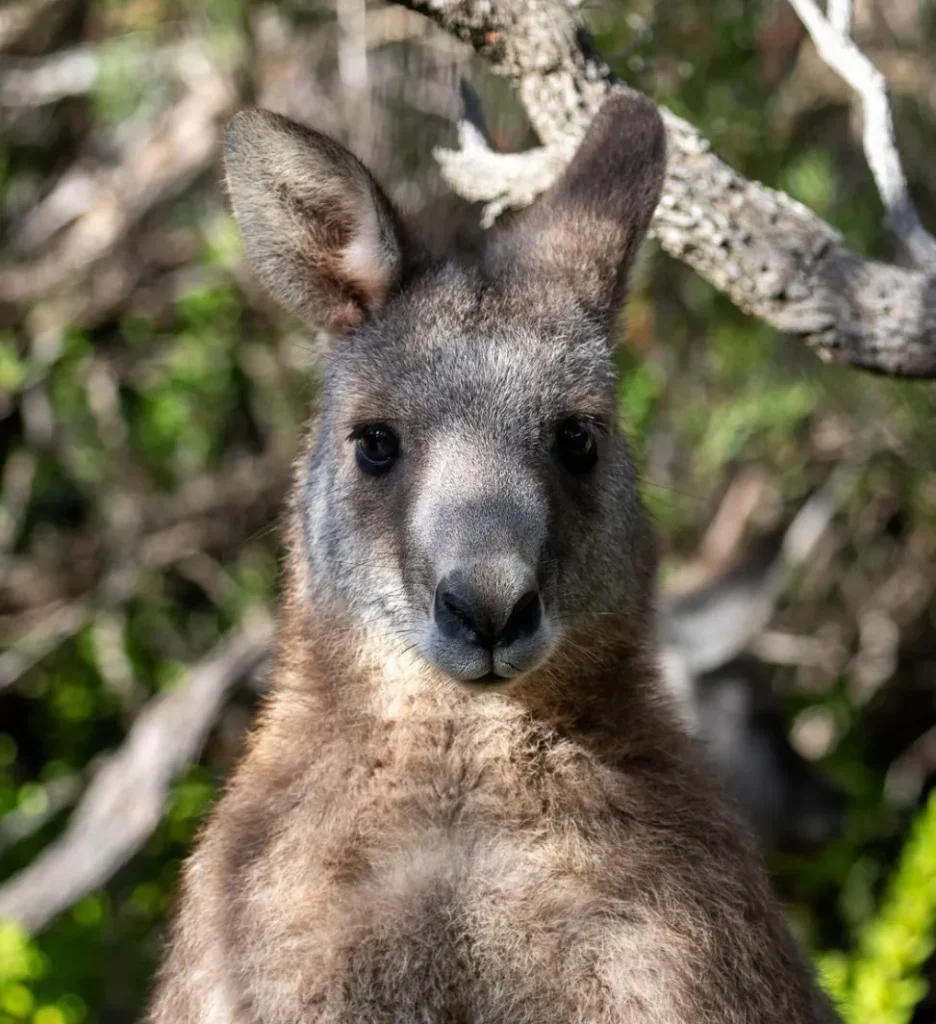
- Eastern Grey Kangaroos: These are the Aussie icons and are everywhere in the blue mountains where you’ll see them grazing in open areas within eucalyptus forests.
- Common Brushtail Possum: This nocturnal marsupial is found all over the Blue Mountains and is part of the ecological puzzle here.
- Koala: This marsupial eats eucalyptus leaves and is one of Australia’s most famous animals that live in eucalypt forests in the Blue Mountains.
- Platypus: Platypus are rare in BM’s freshwater systems; their presence is part of the aquatic diversity.
- Common Wombat: Another Blue Mountains resident, a burrowing marsupial that helps with soil aeration and habitat creation.
Native Fish
- Longfin Eel: A key fish species in Blue Mountains freshwater systems. It’s a sign of the health of the water bodies in this area, among others.
- Australian Bass- Found in freshwater and rivers and streams in the blue mountains so they are important in this region’s freshwater ecology.
Conservation and Management Issues

Human impact and external factors like pest incursion are major management challenges in the Blue Mountains. To address these challenges fully, integrated management is needed so the area’s ecological integrity can be maintained.
- Key Management Outcomes: Preserving different habitats, managing impacts of recreational activities and representing ecological communities fairly.
- Major Management Issues: Biodiversity loss, external impacts, and effective integrated management are the keys to conservation in this region.
- Management Guidelines: Understanding ecological processes and maintaining ecosystem integrity in the Blue Mountains. Effective management requires collaboration between government agencies, conservation groups and local communities.
Conclusion
The Blue Mountains is an amazing combination of natural beauty, biodiversity and heritage. It has vast eucalypt forests and sclerophyll woodlands with many bird species and unique amphibians all together to make a colourful patchwork of Australian flora and fauna. By addressing conservation and management issues, we will have this landscape for future generations. Whether it’s exploring Grose Valley’s deep valleys, Wentworth Falls Heights or the intricate ecosystems of Blue Mountains National Park, visitors are welcome to experience one of Australia’s most beautiful and diverse places.
FAQ
What are the main plant communities in the Blue Mountains?
Eucalyptus forest community type or sclerophyll forests have high endemism of native plant species and are suitable for this region.
How can I see wildlife in the Blue Mountains?
Autopia Blue Mountains Tours & Blue Mountain Eco-Tours offer eco-tours where you can meet koalas and Eastern Grey Kangaroo and many Australian birds.
What are the main issues for Blue Mountains National Park management?
Management of human impacts, invasive species biodiversity and ecological health are key conservation priorities in Blue Mountains Park.
How do eucalypts contribute to the ecology of the Blue Mountains?
Eucalypts have many animal species that depend on them and help maintain ecological balance in the Blue Mountains. Eucalyptus trees provide habitat, food, and overall health to ecosystems in this region.
Why is the geology of the Blue Mountains important?
The geology that makes these cliffs and rocky outcrops is home to many animals and is a natural wonder.